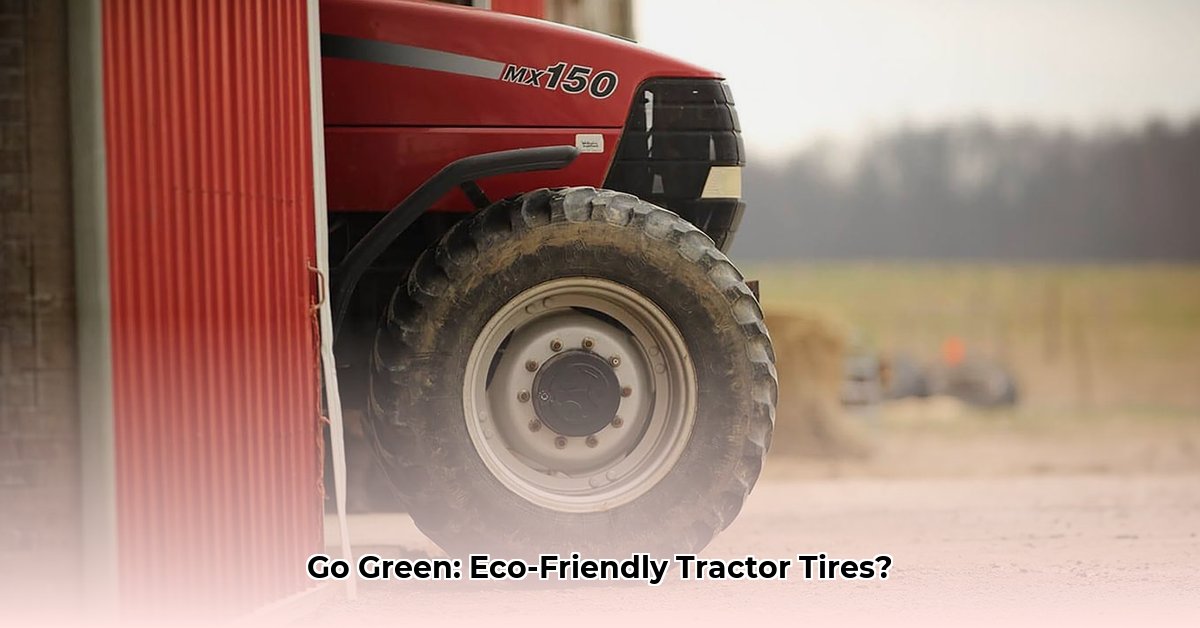
Tractor Front Tires: A Cornerstone of Sustainable Agriculture
Sustainable farming practices extend beyond crop selection and pest management; they encompass the entire operation, including the equipment used. Your tractor's front tires, often overlooked, play a surprisingly significant role in the efficiency and environmental impact of your farm. This article explores the crucial impact of tire selection on fuel consumption, soil health, and overall sustainability, offering a practical guide to making informed choices. For more in-depth information on tire selection, check out this helpful resource: Tractor Tire Guide.
The Unsung Heroes: How Front Tires Impact Sustainability
Front tires directly influence tractor handling, fuel efficiency, and soil health. Poor traction leads to increased wheel slip, wasting fuel and compacting the soil. Soil compaction reduces water infiltration, nutrient availability, and ultimately, crop yields. Therefore, selecting the appropriate tires is a critical investment in both economic and environmental sustainability. This choice directly affects your ability to conserve valuable natural resources and practice economically sound agricultural methods.
Low Rolling Resistance Tires: Fuel Savings and Soil Preservation
Low rolling resistance tires are designed to minimize energy loss during operation. This translates to reduced fuel consumption, saving you money and lowering your carbon footprint. Importantly, the reduced traction minimizes soil compaction, improving water retention, nutrient uptake, and microbial activity. "The benefits extend beyond immediate fuel savings. Healthy soil is the foundation of sustainable agriculture,” says Dr. Emily Carter, Soil Scientist, University of California, Davis. "These tires offer a substantial and lasting return on investment."
Bio-Based Tires: A Look at Renewable Alternatives
Research into bio-based tires, manufactured using plant-derived materials and recycled rubber, is gaining momentum. Early studies indicate these tires could significantly reduce greenhouse gas emissions associated with tire production and use. While initial costs may be higher, the long-term environmental advantages are compelling. However, further research is needed to fully assess their performance and durability compared to conventional rubber tires. The question isn't simply "are they better?" but "what is the long-term cost-benefit analysis across fuel consumption, maintenance, and environmental considerations?"
Choosing the Right Tires: A Step-by-Step Guide
Selecting tractor tires requires careful consideration of several factors. Follow these steps for optimal performance and sustainability:
- Assess Your Needs: Analyze your soil type (clay, sandy loam, etc.), typical farming tasks (plowing, tilling, hauling), and operating conditions (wet or dry).
- Verify Tractor Compatibility: Ensure chosen tires match your tractor's specifications (size, weight capacity, and recommended tire pressure) for safety and optimal performance.
- Evaluate Tire Construction: Look for tires with strong sidewalls and durable treads designed to withstand the stresses of your specific farming operations. Consider the long-term costs versus the benefits of extended tire lifespan.
- Explore Sustainable Options: Consider bio-based or recycled rubber tires, weighing the initial investment against long-term environmental benefits and potential government incentives.
- Check the Warranty: A robust warranty indicates manufacturer confidence and protects your investment.
Evaluating Economic Viability: Is the Investment Justified?
The cost-effectiveness of eco-friendly tires depends on several factors. While the initial cost might be higher, long-term savings on fuel, potential yield increases due to improved soil health, and potential government subsidies for sustainable practices need to be considered. A thorough cost-benefit analysis, considering the total lifespan of the tire, is crucial. This isn't solely about the upfront cost, but rather the return on investment over the entire life cycle of the tire.
Tire Pressure Management: A Crucial Factor
Maintaining correct tire inflation is essential for fuel efficiency and soil health. Underinflation leads to increased soil compaction and fuel consumption, while overinflation may damage the tires and the soil. Regular tire pressure checks are critical for both operational efficiency and environmental protection. Aim for the manufacturer's recommended pressure, adjusting based on the specific soil conditions.
Measuring Success: Tracking Performance, Fuel Economy and Soil Health
To assess the effectiveness of your tire choices, monitor these key indicators:
- Fuel Consumption: Track fuel usage per acre to quantify fuel savings achieved through eco-friendly tires.
- Crop Yields: Observe if improved soil health, a result of reduced compaction, leads to higher crop yields.
- Soil Health Assessments: Regularly conduct soil tests measuring compaction, water infiltration, and nutrient availability to gauge the impacts of your tire management practices.
The Future of Tractor Tires: Innovation in Sustainable Agriculture
The realm of sustainable tire technology is constantly evolving. Future innovations are anticipated to include more affordable bio-based materials, advanced tire pressure monitoring systems, and potentially more innovative designs to minimize soil disturbance. These ongoing advancements will play a central role in the future of sustainable farming. This continuous improvement signals a promising future where agricultural practices are increasingly optimized for environmental sustainability and economic viability.
How to Choose Sustainable Tractor Tires for Fuel Efficiency
Key Takeaways:
- Tire selection significantly influences fuel efficiency and soil health.
- Radial tires typically offer better fuel efficiency than bias-ply tires.
- Precise tire inflation is paramount for optimal fuel economy and minimizing soil compaction.
- Consider the unique demands of your farm operation (soil type, tasks) when choosing tires.
- Investing in high-quality, long-lasting tires can lead to substantial long-term cost savings.
Understanding Tire Types and Their Effects on Fuel Consumption
Tire type dramatically impacts tractor performance and fuel efficiency. Radial tires, with their flexible sidewalls, generally offer superior fuel efficiency compared to bias-ply tires. Their reduced rolling resistance translates directly into better fuel economy. However, they often involve a higher upfront cost. Dr. Robert Miller, Agricultural Engineering, Purdue University, notes, "The long-term savings in fuel often outweigh the increased initial investment for radial tires."
Tire Size and Pressure: Striking a Balance
Tire size influences fuel economy; incorrect sizes lead to increased wear and reduced performance. Always consult your tractor’s manual for recommended sizes. Proper inflation pressure is critical. Underinflation results in increased fuel consumption and soil compaction, whilst overinflation can cause tire damage. Regular pressure checks are necessary for optimized efficiency and minimal soil disruption.
Tread Patterns: Adapting to Terrain
Tread patterns impact fuel consumption. Aggressive patterns, ideal for challenging conditions, increase rolling resistance, potentially leading to higher fuel use. Less aggressive patterns are more efficient on firmer ground. Matching the tread pattern to your operational environment is therefore a crucial step in optimizing fuel efficiency and minimizing soil compaction.
Sustainable Practices: Beyond Fuel Economy
Sustainability encompasses more than fuel efficiency. Minimizing soil compaction is crucial. Low-pressure tires, utilizing IF (Increased Flexion) and VF (Very High Flexion) technology, significantly reduce compaction. These tires allow for lower operating pressures, distributing weight evenly. While often pricier, this is a powerful step toward sustainable agriculture.
Making the Right Decision: A Practical Guide
- Assess Your Needs: Carefully evaluate your typical working conditions, including soil type and farming tasks.
- Consult the Manual: Refer to your tractor’s manual for recommended tire sizes and inflation pressures.
- Compare Tire Types: Weigh the benefits and drawbacks of radial versus bias-ply tires, considering cost and performance. Explore IF/VF tire options, particularly for large-scale operations.
- Select Appropriate Tread Patterns: Choose tread patterns suitable for prevalent terrain.
- Establish a Maintenance Schedule: Regularly check tire pressure and rotate tires as needed for even wear.
Radial vs. Bias-Ply Tires: A Comparison
| Feature | Radial Tires | Bias-Ply Tires |
|---|---|---|
| Fuel Efficiency | Superior | Inferior |
| Ride Comfort | Superior | Inferior |
| Traction | Generally Good (depends on tread pattern) | Good in specific conditions |
| Cost | Higher initial investment | Lower initial investment |
| Durability | Variable; often durable | Generally highly durable |
| Soil Compaction | Generally lower | Potentially higher |